At Banana Bathrooms, our designers work closely with homeowners across Newcastle, Lake Macquarie and the Hunter Valley, giving us a firsthand view of how bathroom design is evolving heading into 2027.
As leading bathroom renovators in Newcastle, we’re seeing Australian bathrooms become warmer, more expressive and more personal. Richer colours, natural materials, architectural layouts, wellness features and more decorative detailing are all becoming part of the conversation.
The trends in this guide are informed by our own bathroom renovation projects, the products and finishes our clients are selecting, and insights from industry specialists including Tile Warehouse and Design Pad.
Whether you’re planning a complete bathroom renovation or simply looking for inspiration, these are the bathroom trends, colours, tiles, vanities and design ideas we expect to shape Australian bathrooms in 2027.
Table of Contents
- Mid-Century Bathroom Design Gets Bolder
- The Holiday House Bathroom Is Growing Up
- Personalised Wellness Becomes a Bathroom Essential
- Classical and Maximalist Bathroom Styles Return
- Small Bathroom & Ensuite Trends for 2027
- Bathroom Colours for 2027
- Bathroom Tile Trends for 2027
- Bathroom Vanity Trends for 2027
- Modern Bathroom Design Ideas for 2027
- An Architect’s Perspective on Bathroom Design in 2027
- Final Thoughts on Bathroom Trends 2027 Australia
- Bathroom Trends 2027 FAQs
Bathroom Trends 2027: Australia’s Best Bathroom Ideas & Designs
According to Shelley Wylie, Bathroom Designer at Banana Bathrooms, mid-century influences, highly decorative interiors and a continued emphasis on personalised wellness will be among the biggest bathroom trends shaping 2027.
1. Mid-Century Bathroom Design Gets Bolder
Mid-century design will continue to influence Australian bathrooms in 2027, but expect a richer, more expressive look.
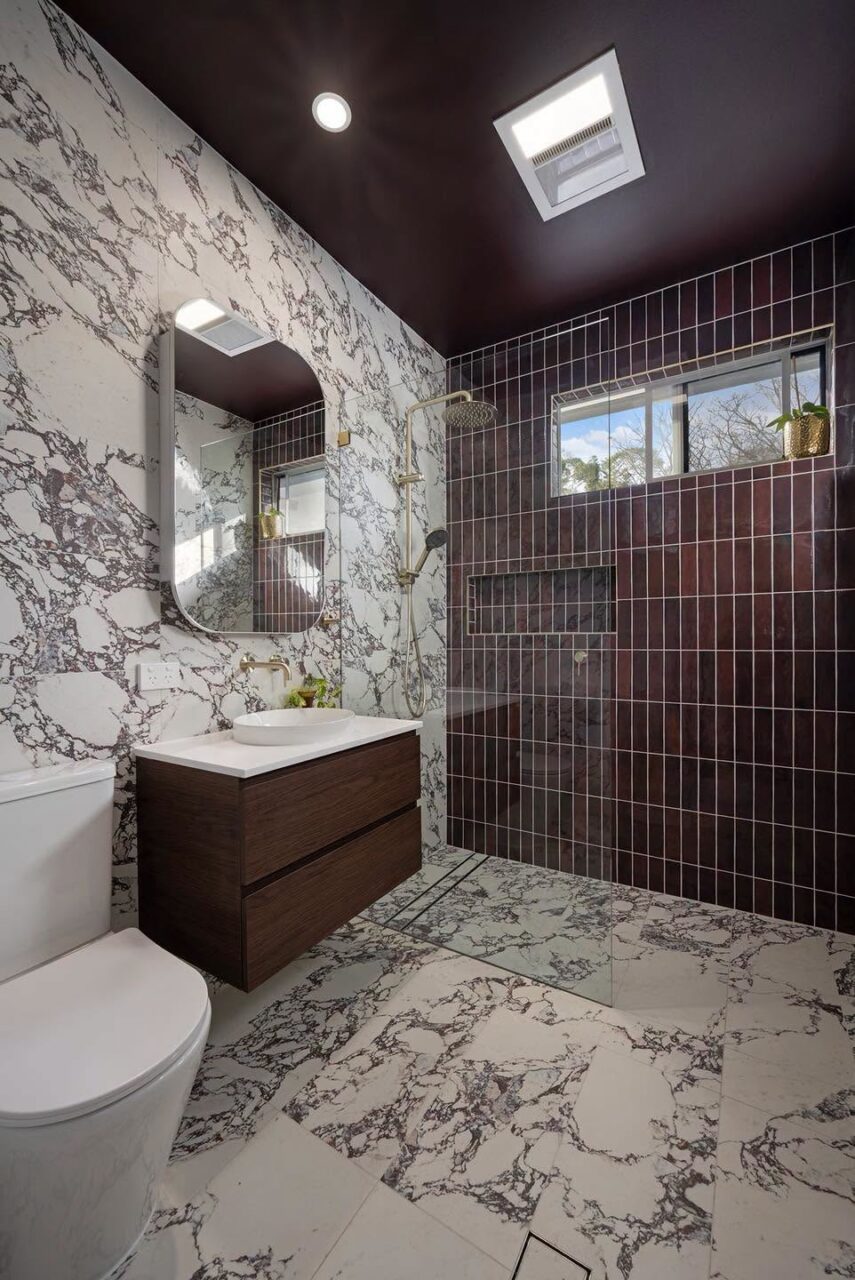
The softer timber, muted green, and simple forms associated with mid-century-inspired bathrooms are evolving toward deep burgundy and plum, olive greens, chocolate tones, and warmer earthy colours.
We’re also seeing the influence extend beyond mere colour choices. Concrete and tiled benchtops, mosaic tiles, solid shower walls, and exaggerated window shapes can add stronger architectural character, while vanities are becoming more distinctive through interesting profiles, handles, and furniture-inspired detailing.
For Shelley, this represents a noticeable move away from the sleek, minimalist bathroom that has dominated for years.
“After years of styling to look like everyone else, mid-century styling in this decade is about self-identity & individualisation. Declaring that your space is unlike anyone else’s. It’s a bold statement for owners to make.
Rather than trying to make every element disappear, the bathroom itself is becoming more expressive. A vanity can be a feature piece. Tiles can introduce pattern and texture. Hardware can become part of the design rather than simply performing a function. “In true mid-century style, no element of design is left unconsidered, and that’s what a lot of our clients are asking for.”
View this post on Instagram
View this post on Instagram
Mid-Century Bathroom Colours for 2027
Expect to see:
- Olive and moss greens
- Burgundy, plum and deep wine tones
- Chocolate and dark timber
- Warm cream and stone
- Bronze and aged metallic finishes
These richer colours work particularly well when balanced with natural timber, stone, handcrafted ceramics, and smaller-format tiles.
2. The Holiday House Bathroom Is Growing Up
White, beige, cream and resort-inspired bathrooms have been the hallmark of Australian bathroom design for several years.
Shelley sees this partly as a response to the years following COVID, when many homeowners wanted their own homes to capture the relaxed feeling of favourite holiday destinations.
“During and after Covid, life felt so uncontrollable. Creating calm and demure interiors made people feel like home was a sanctuary from the outside world. But it was a very homogeneous style and it quickly lost its appeal in the face of day to day reality. There’s only so many times you enjoy stripping a white couch of it’s covers for another wash.
In 2027, that desire for calm hasn’t disappeared, but it is developing some more personality. The look is becoming more layered, decorative and personalised.
Homeowners are increasingly inspired by a variety of holiday-type houses – the beach shack, the Queenslander, the fishing hut, the retro cottage. Soft neutral foundations are increasingly combined with influences from classical, baroque, and other decorative styles, reflecting how holiday houses are often decorated over time with unique pieces. Expect muted pinks, greens and blues alongside bronze finishes, patterned tiles, ornamental trims and custom detailing.
Even the way you install tiles can add character. Instead of relying solely on a feature tile, you can lay simple tiles in more decorative patterns to add interest without overwhelming the room.
The result still feels calm, but considerably less generic.
View this post on Instagram
How to Update a Neutral Bathroom for 2027
You don’t necessarily need to abandon a neutral palette. Instead, introduce personality through:
- Patterned or decoratively laid tiles
- Feature lighting
- Coloured cabinetry
- Bronze or warmer metal finishes
- Decorative mirrors
- Custom joinery details
- Handcrafted basins and accessories
This lets the bathroom keep the relaxed appeal people love while feeling more personal and considered.
3. Personalised Wellness Becomes a Bathroom Essential
Wellness will remain a major influence on bathroom design in 2027, but the idea of a wellness inspired bathroom is becoming more personal and attainable. Shelley says it’s a push coming from the Millennial generation.
“The Millennials are reaching an age where their sense of wellness is not as assured. They have limited time to address this concern, and so they’re using what resources they do have to integrate wellness into their daily routines.
LED mirrors and underfloor heating have already become familiar inclusions in many renovations. Now we’re seeing growing interest in features such as shower seating, spa baths, steam rooms, bidets and home sauna solutions.
For homeowners planning to stay in their property long term, wellness is also beginning to overlap with comfort and accessibility. A good bathroom renovation should last 15-20 years, so it makes sense to include features that will be useful not just now but well into the future.
Thoughtfully positioned grab rails, generous showers, seating, improved lighting and easier access can make a bathroom safer and more comfortable without making it feel clinical.
Remember, no single definition of a wellness bathroom exists.
For one homeowner, it might mean underfloor heating, warm lighting and a deep bath. For another, it might mean a steam shower and sauna. For someone planning their long-term home, it could mean designing a beautiful bathroom that will remain comfortable and practical as their needs change.
View this post on Instagram
Bathroom Wellness Ideas for 2027
Features we expect to see more of include:
- Underfloor heating
- Layered and ambient lighting
- LED mirrors
- Shower seating
- Steam showers and steam rooms
- Spa baths
- Bidets and smart toilets
- Home saunas
- Integrated grab rails
- Larger, more accessible showers
The common theme is designing the bathroom around how it will benefit your health, not just cleaning your body.
4. Classical and Maximalist Bathroom Styles Return
Noticed that there’s a lot of marble around at the moment? Yeah, so have we. The go-to neutral bathroom is now being informed by classical-inspired designs.
Victorian richness, Georgian grandeur and Baroque influences are providing an alternative to years of pared-back minimalism. The new ‘neutral’ is imbued with old world charm, time honed designed choices, and a sense of solidity.
These bathrooms might incorporate antique-inspired lighting, decorative mirrors, artwork, murals or wallpaper, vanities with legs and more elaborate tile choices.
The aim isn’t necessarily to recreate a historical bathroom. Instead, traditional details are being combined with contemporary products and layouts to create bathrooms that feel established, collected and a step above what’s trending.
Marble and marble-inspired surfaces fit naturally into this shift towards classical interiors.
Rather than the subtle white and grey marble looks that have been common for years, expect stronger veining, warmer colours, and more expressive stone patterns.
Marble can become the bathroom’s visual centrepiece through a vanity top, feature wall, shower, or full-height application.
For homeowners who love the look but want a different price point or maintenance profile, modern marble look porcelain tiles can create a similar visual impact.
Combined with timber, bronze tapware, decorative lighting and furniture-inspired cabinetry, marble feels less like a cold luxury finish and more like part of a warm, layered bathroom.
View this post on Instagram
5. Small Bathroom & Ensuite Trends for 2027
Small bathrooms and ensuites are becoming more considered in 2027, with homeowners moving away from simply trying to make every compact space look larger and instead focusing on making it feel intentional, functional and full of character.
Richer colours, decorative details, and wellness features that work well in larger bathrooms can still work beautifully in a compact space when carefully selected.
Use One Strong Design Feature
In a small bathroom or ensuite, one confident feature can have more impact than several competing elements.
That might be:
- A richly coloured vanity
- A mosaic tiled shower wall
- A patterned floor
- A distinctive mirror
- Statement lighting
- A handcrafted basin
Keeping the surrounding finishes relatively restrained lets that feature take centre stage without making the room feel overly busy.
View this post on Instagram
Smaller Format Tiles Add Character
Smaller format tiles work particularly well in compact bathrooms and ensuites because they can introduce colour, texture and movement without requiring a large feature wall.
They also suit curves, shower niches, and smaller architectural details where larger format tiles can feel too dominant.
In 2027, expect to see more compact bathrooms using mosaics, square tiles and decorative laying patterns to create personality.
Make the Vanity Work Harder
The vanity often becomes one of the most important elements in a small bathroom or ensuite because it needs to provide storage while also contributing to the overall design.
Timber finishes, richer colours, interesting profiles and decorative handles can turn a practical piece of cabinetry into a feature.
Wall-hung vanities remain particularly useful in smaller spaces because keeping more of the floor visible can help the room feel open without sacrificing storage.
Use Storage to Reduce Visual Clutter
Good storage immediately affects how a compact bathroom feels.
Recessed shaving cabinets, custom vanities, shower niches and carefully positioned shelving can keep everyday items accessible without filling the room with additional cabinetry.
The aim is to use the available space better rather than simply adding more storage.
Layer the Lighting
Lighting can completely change the feel of a small bathroom or ensuite.
Rather than relying on one ceiling light, combine practical lighting with softer feature lighting around mirrors, vanities or niches.
LED mirrors, wall lights and subtle strip lighting can make compact spaces feel warmer and more considered while also improving everyday functionality.
Choose Wellness Features Carefully
You don’t need a large bathroom to add comfort and wellness.
Underfloor heating, shower seating, improved lighting, bidet functionality and well-designed walk-in showers can all work in smaller bathrooms and ensuites.
The key is choosing the features that genuinely improve how you use the room rather than trying to include every available option.
Small Bathrooms Are Becoming More Expressive
For years, the standard advice for a small bathroom or ensuite was to use white finishes, minimal detailing and large mirrors to make the room appear bigger.
Those principles still have their place, but 2027 bathroom design is becoming much less cautious.
Colour, pattern, timber, decorative lighting and more individual product choices can give a compact bathroom considerably more personality without compromising functionality.
The best small bathroom and ensuite designs for 2027 will balance storage, functionality and visual impact, using a handful of carefully chosen features to make a relatively small space feel considered and complete.
View this post on Instagram
6. Bathroom Colours for 2027
Bathroom colour palettes are becoming richer and more confident in 2027, moving beyond the soft whites, creams and pale beiges that have dominated recent years.
Shelley Wylie, Bathroom Designer at Banana Bathrooms, expects olive green, burgundy, plum, chocolate brown, and muted pink to become increasingly prominent as Australian bathrooms move toward warmer, more expressive interiors.
Rose from Tile Warehouse sees the same shift at the product level.
“After years of styling to look like everyone else, mid-century styling in this decade is about self-identity & individualisation. Declaring that your space is unlike anyone else’s. It’s a bold statement for owners to make.”
Earthier Neutrals Replace Pale Beige
Neutral bathrooms aren’t disappearing, but the neutrals themselves are changing.
Rose is seeing stone-look tiles gradually move away from very light, soft beiges towards warmer mid-tones, taupes and true browns.
This creates a richer foundation that works particularly well with natural timber, bronze finishes and stronger feature colours.
Burgundy, Olive and Earthy Tones
Burgundy looks set to remain one of the strongest colours moving into 2027, particularly when combined with less expected tones such as olive, dusty pink, terracotta and caramel.
Rather than relying on one dominant colour, these combinations create a more layered bathroom palette with greater depth and personality.
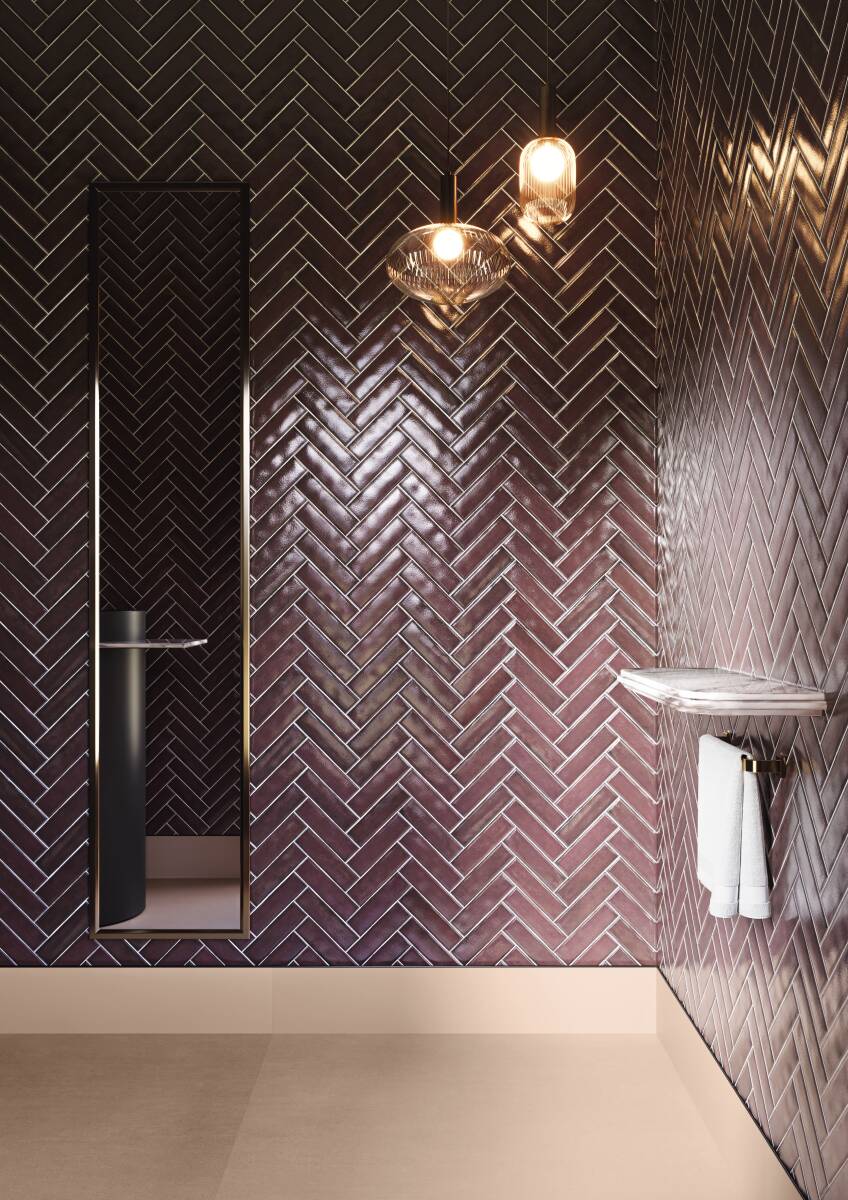
Image: Artfact Marsala tile at Tile Warehouse
Muted Pinks and Blues
Soft pinks and dusty blues remain useful for homeowners who want colour without creating an overly bold space.
They work especially well alongside warm stone, timber, marble and decorative metallic finishes.
Warmer Metallic Finishes
Bronze, brushed brass and other warm metallic finishes complement the richer palettes expected in 2027.
Used through tapware, handles, lighting and accessories, they can add warmth without requiring large areas of strong colour.
The overall direction for 2027 is less about following one fashionable colour and more about creating layered combinations that feel warm, personal and connected to the character of the home.
View this post on Instagram
7. Bathroom Tile Trends for 2027
Bathroom tile design in 2027 is becoming more interesting through scale, layout and material character, rather than simply through bolder colours.
According to Rose from Tile Warehouse, large-format neutral tiles remain extremely popular. The change is in how they are being combined with smaller tiles to create contrast and detail.
“”Most commonly we’re seeing bathrooms use 600 x 600 tiles throughout, or 600 x 600 on the floor with 600 x 1200 on the walls. These larger tiles are then paired with a smaller-format feature. There’s a strong theme of contrast of scale rather than contrast of colour.
Smaller-Format Tiles Move Beyond the Feature Wall
Smaller-format tiles continue to perform strongly, but their role in the bathroom is changing.
Rather than being restricted to a single feature wall, they are increasingly being used on statement floors and across larger areas of the bathroom.
They can also be used above shelf walls or carried from the shower through to the vanity area to create continuity between different zones.
Contrast of Scale Becomes a Design Feature
One of the most interesting tile ideas for 2027 is combining dramatically different tile sizes within the same bathroom.
A large-format stone-look tile might provide the calm foundation, while a smaller rectangular or square tile introduces texture and detail.
This lets homeowners add interest without competing colours or patterns.
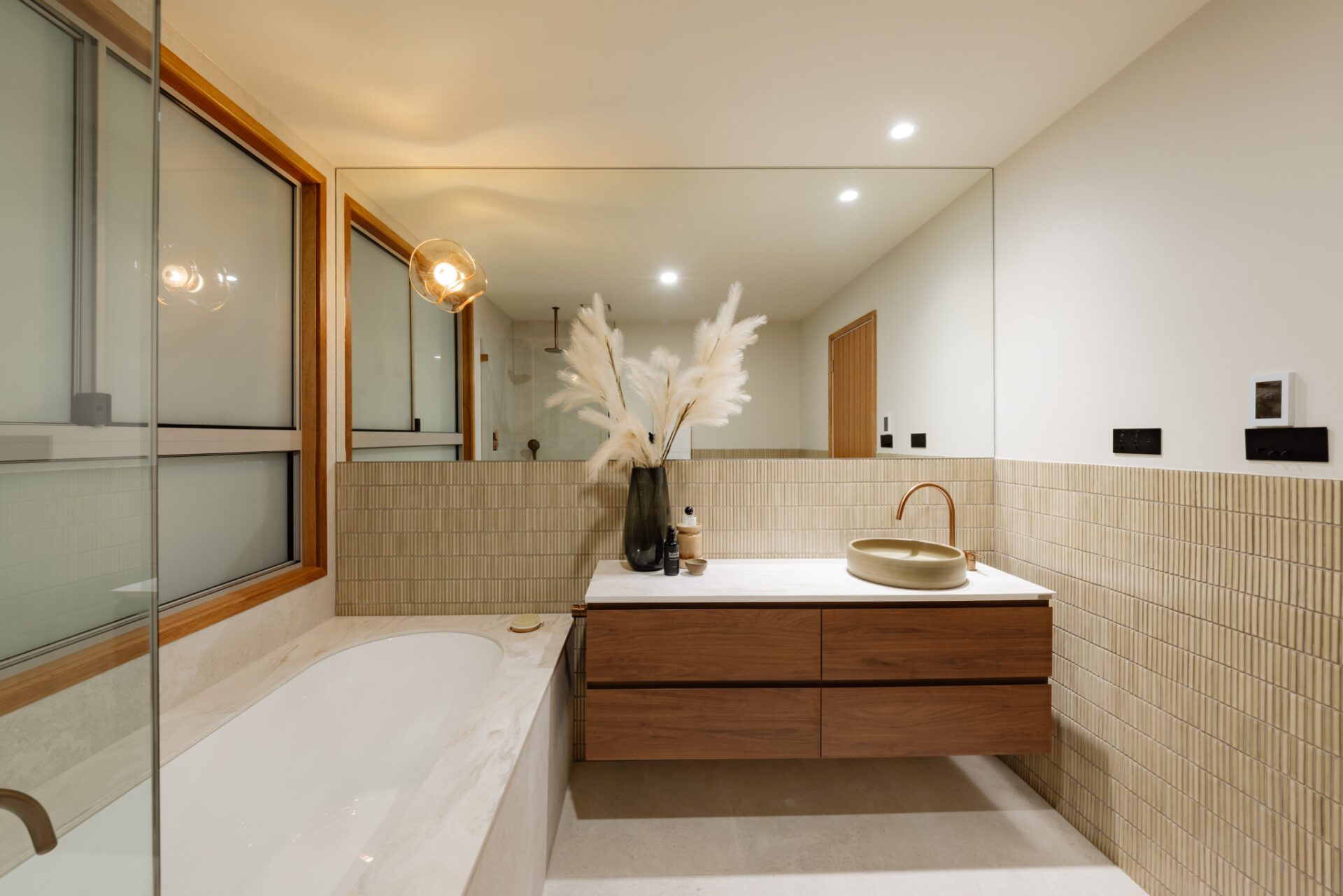
Mixing Tile Formats Adds Texture
Using different tile formats across the walls can create subtle texture even when the colours remain closely related.
This works particularly well in bathrooms where the goal is to create depth while maintaining a cohesive palette.
The result can feel much more considered than simply selecting one tile and repeating it across every surface.
View this post on Instagram
Statement Floors Return
For several years, feature walls have been the obvious place to introduce a more decorative tile.
In 2027, Rose expects to see smaller-format tiles used more often on bathroom floors, adding character from the ground up.
This approach works particularly well when paired with restrained large-format wall tiles.
Warm Stone Looks Continue to Grow
Stone-look tiles remain a major bathroom trend, but the stones inspiring them are changing.
Rose identifies vein-cut travertine, Crema Marfil and Silver Root as key looks currently gaining attention. These finishes introduce more movement, texture and warmth than the pale neutral stones that have dominated recent bathroom design.
Tile Warehouse ranges such as Aeterna Avorio and Norcia Crosscut Beige are good examples of this direction, combining warm beige and taupe tones with natural stone detailing that works particularly well in contemporary bathrooms.
For 2027, expect this shift towards warmer, earthier stone looks to continue, particularly when paired with timber, bronze tapware and smaller-format feature tiles.
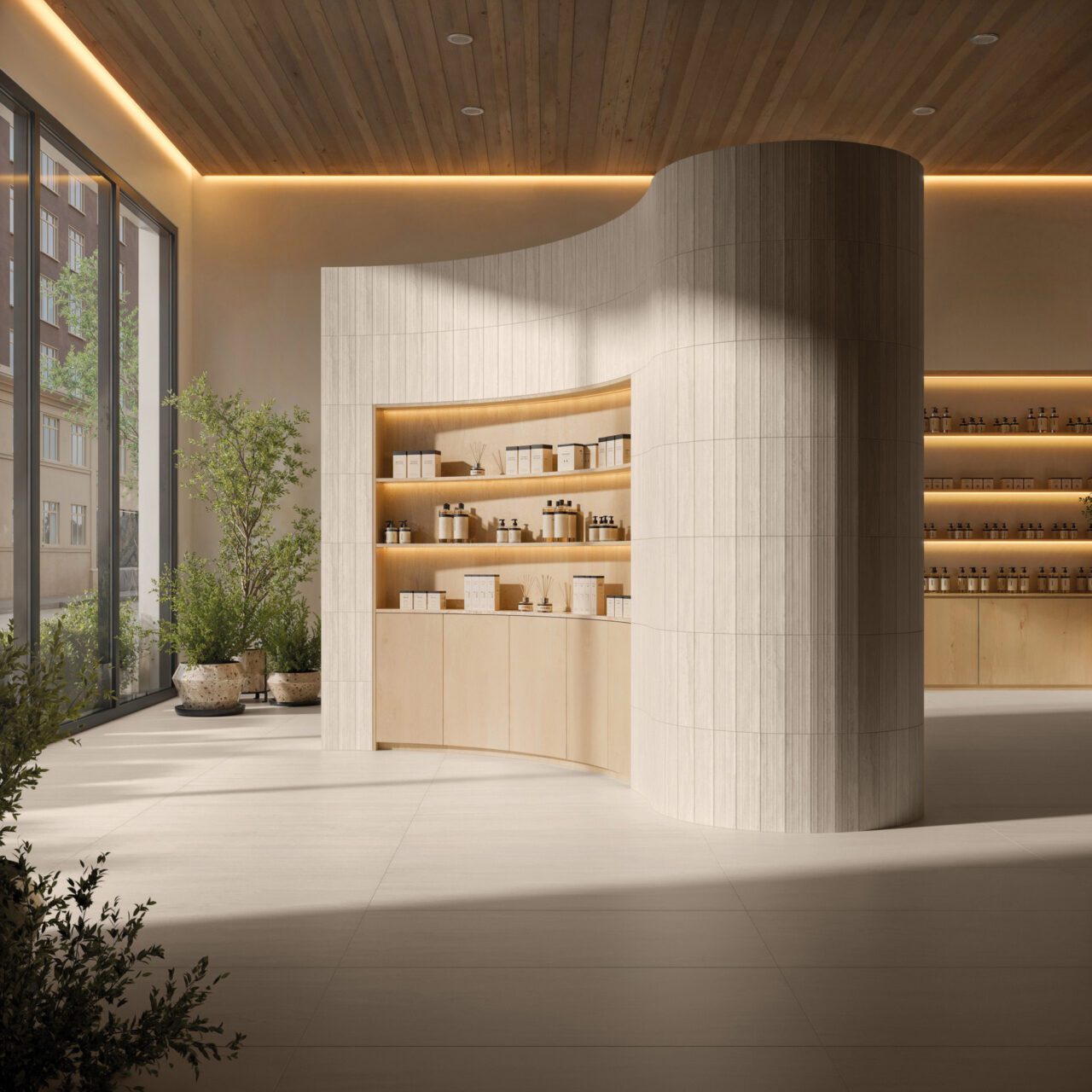
Image: Aeterna Avorio Soft Texture Wall & Floor Tile at Tile Warehouse.
Painted Ceilings Become Part of the Bathroom Palette
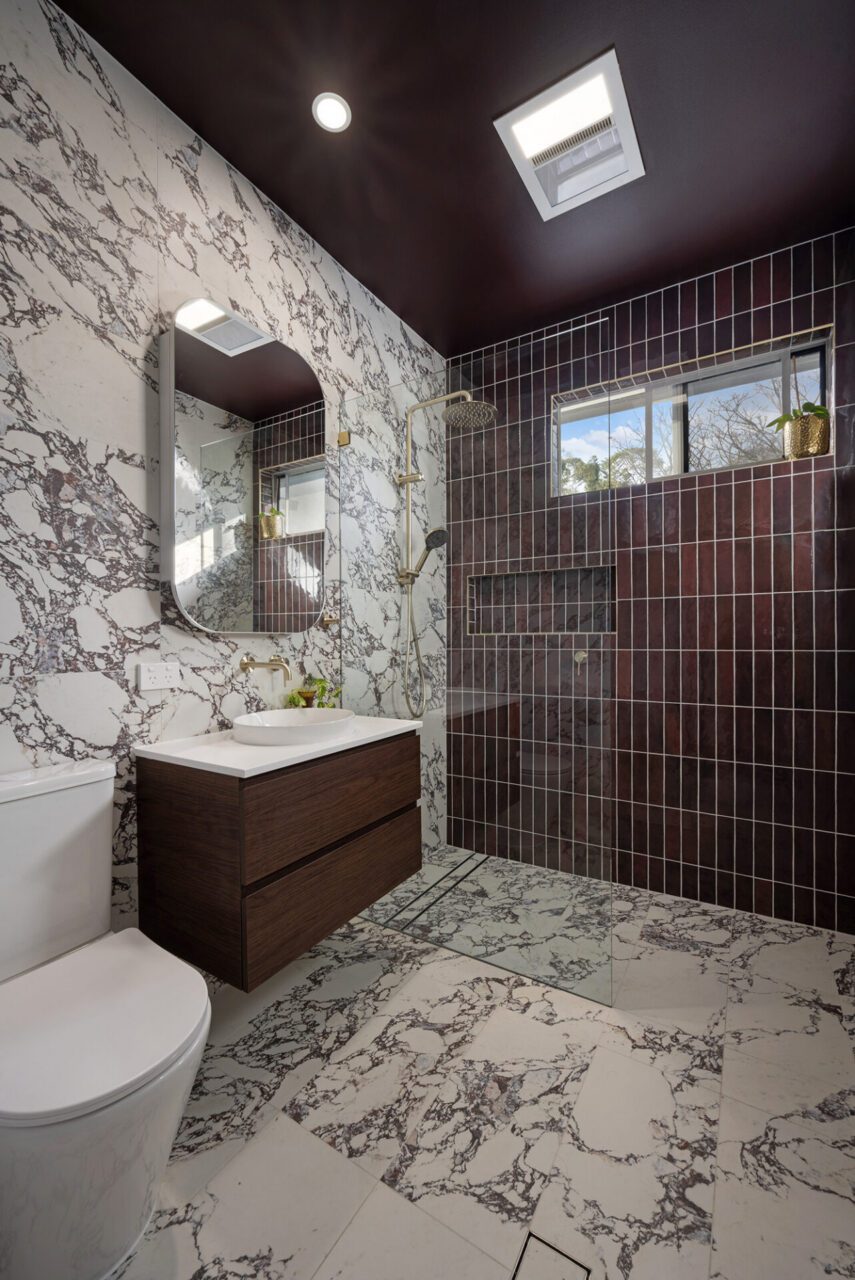
One of Rose’s more unexpected observations is the growing use of painted bathroom ceilings.
Often overlooked entirely, the ceiling can become part of the overall design rather than simply remaining white.
For a more luxurious result, Rose recommends selecting a ceiling colour with a similar depth to the surrounding walls, helping the room feel more immersive and complete.
Playing It Safe Is the Trend to Leave Behind
Rose’s strongest advice for homeowners heading into 2027 is not to design a bathroom purely around what feels safest.
“Nothing dates faster than bland. Be inspired by your home’s original features and incorporate elements that are sympathetic to its era.
That aligns closely with the wider movement toward bathrooms that feel more personal and connected to the home’s architecture.
For 2027, successful bathroom tile design won’t necessarily be about choosing the most fashionable tile. It will be about combining scale, texture, colour and material in a way that feels considered and appropriate for the home.
8. Bathroom Vanity Trends for 2027
Bathroom vanities are becoming more decorative in 2027, moving away from the ultra-sleek, handleless designs that have dominated recent years.
Instead, we’re seeing more vanities designed to feel like pieces of furniture, with stronger profiles, visible handles, richer finishes and more custom detailing.
View this post on Instagram
Furniture-Inspired Vanities
Vanities with curved fronts, detailed cabinetry, open shelving and statement handles are becoming more common as homeowners look for ways to give their bathroom more personality.
Rather than disappearing into the background, the vanity is increasingly becoming one of the room’s main design features.
Timber and Richer Colours
Natural timber remains popular, but darker, warmer tones are becoming more prominent alongside painted finishes in colours such as olive, burgundy, and muted blue.
These finishes work particularly well with marble, handcrafted basins, warm metallic tapware and decorative lighting.
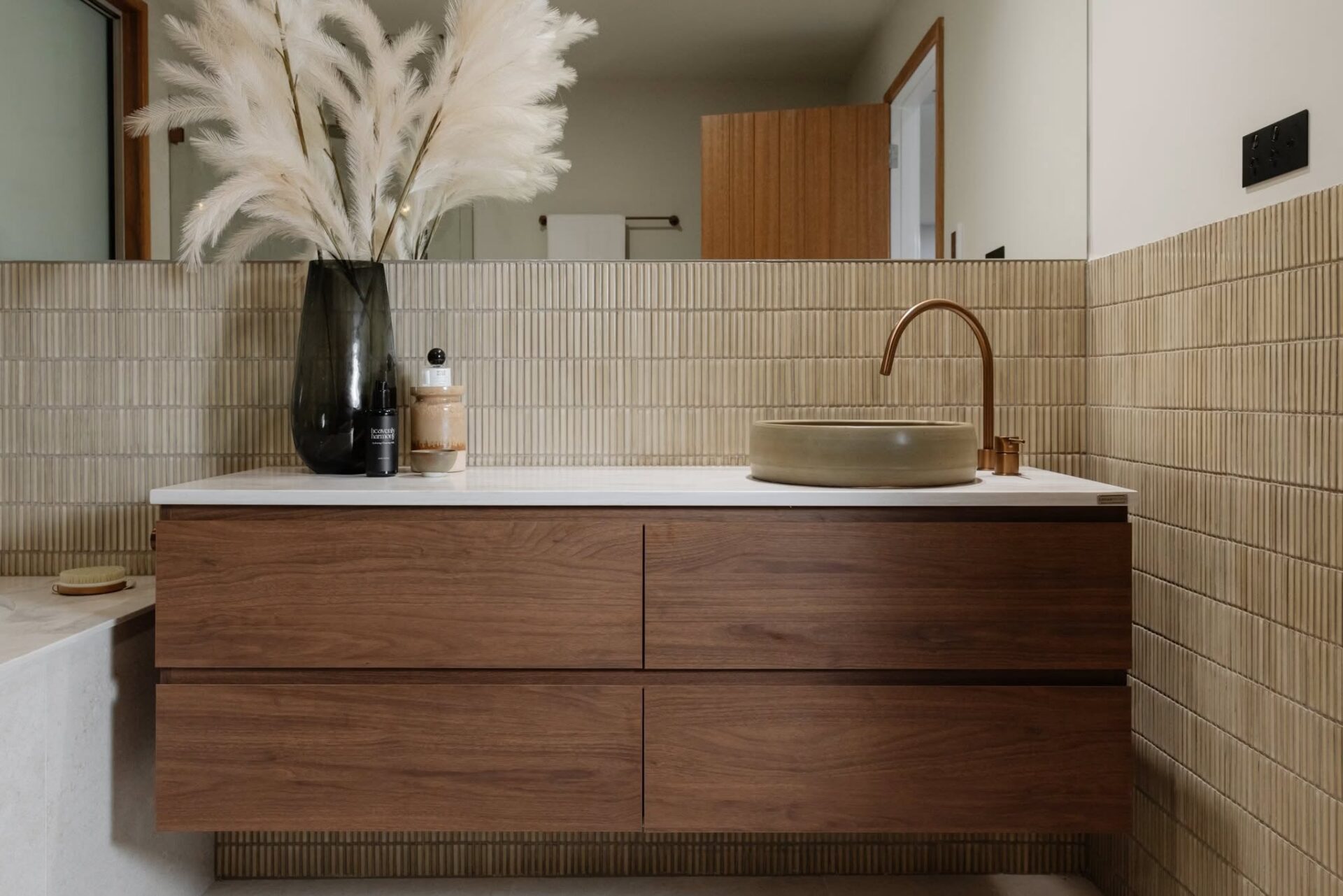
Image: Banana Bathrooms showroom bathroom; Hotel-Inspired Designer Bathroom Retreat
Handles Are Back
Handleless cabinetry will remain, but decorative handles and knobs are returning as part of the broader move away from strict minimalism.
Bronze, brass, timber and sculptural hardware can add another layer of detail without requiring major changes to the overall design.
Custom Joinery Adds Individuality
Custom vanities let homeowners tailor storage, proportions, materials, and finishes to suit both the space and the wider bathroom design.
For 2027, expect more bathrooms to use cabinetry as a way to introduce character through:
- Fluted or profiled fronts
- Curved cabinetry
- Open shelving
- Integrated storage
- Tiled or stone benchtops
- Contrasting handles
- Furniture style legs or detailing
The overall direction is toward vanities that feel more considered, more individual, and more connected to the home’s wider interior style.
While many of these 2027 bathroom trends are being showcased in larger spaces, they can work just as effectively in compact bathrooms.
The key is to be more selective. In a smaller bathroom, thoughtful storage, layered lighting, carefully chosen tiles and one or two strong design features can have an even greater impact.
While many of the biggest 2027 bathroom trends are being showcased in larger spaces, they can work just as effectively in small bathrooms and ensuites.
The key is to be more selective. Thoughtful storage, layered lighting, carefully chosen tiles and one or two strong design features can have an even greater impact when space is limited.
9. Modern Bathroom Design Ideas for 2027
The biggest shift in bathroom design for 2027 isn’t one particular colour, tile, or product. It is the move towards bathrooms that feel more personal, more comfortable and more connected to the wider home.
Minimalism is not disappearing, but it is becoming warmer and less rigid. Expect richer colour, more decorative cabinetry, smaller-format tiles, expressive stone, layered lighting, and architectural details alongside practical improvements in comfort and functionality.
For Shelley Wylie, Bathroom Designer at Banana Bathrooms, the direction is clear: homeowners are becoming more confident about choosing finishes and features that reflect their own style rather than following a single dominant bathroom look.
That means the best bathroom ideas for 2027 will not necessarily be the ones that follow every trend. They will be the bathrooms that combine good design, quality materials and individual character in a way that suits the home and the people living in it.
View this post on Instagram
10. An Architect’s Perspective on Bathroom Design in 2027
The strongest bathroom designs balance current trends with decisions that will still work years from now.
According to Matt Hull from Design Pad Architecture, the best long-term choices focus on functional layouts, durable natural materials and good spatial flow.
Warm Minimalism
Minimalist bathrooms aren’t disappearing, but they are becoming softer and more inviting through warmer tones, natural materials and added texture.
Prioritise Function and Wellness
Matt is seeing more demand for:
- Spa-like features
- Integrated storage
- Better natural light and ventilation
- Wider entries and curbless showers
- Underfloor heating
Ensuites are also becoming more integrated with bedrooms, with walk-through robes creating a stronger connection between spaces.
Use Trends Selectively
Colour, pattern, and decorative detail work best through elements that can be updated more easily, such as lighting, mirrors, vanities, hardware, and feature tiles.
Matt advises avoiding overcommitting to highly ornate tile patterns or ultra-niche fixtures, which are more likely to date quickly.
The most timeless bathrooms feel personal, functional, and appropriate to the home’s architecture.
Explore 2027 Bathroom Trends in Our Newcastle Showroom
The best way to choose bathroom trends for your home is to see the colours, materials, products, and finishes together in a real bathroom setting.
At the Banana Bathrooms Newcastle Bathroom Showroom Experience Centre, you can explore 18 complete bathroom displays featuring a wide range of tiles, vanities, tapware, basins, baths, lighting and bathroom finishes.
If you’re planning a complete bathroom renovation, book a Renovation Consultation with Adam to discuss your space, ideas, budget and the styles you’d like to incorporate into your new bathroom.
Book a Bathroom Consultation.
View this post on Instagram
11. Final Thoughts on Bathroom Trends 2027 Australia
Bathroom trends in Australia for 2027 are moving towards spaces that feel warmer, more expressive and more personal. Richer colours, natural materials, thoughtful storage, wellness features and stronger architectural details are all helping bathrooms feel less generic and more connected to the wider home.
At Banana Bathrooms, we bring these ideas together with practical design, quality products and complete renovation expertise to create bathrooms that suit Australian homes, lifestyles and the way people want to live in 2027 and beyond.
12. Bathroom Trends 2027 FAQs
The biggest bathroom trends for 2027 include warmer colour palettes, richer natural materials, smaller-format feature tiles, furniture-style vanities, spa-like inclusions and more architectural layouts. Bathrooms are also becoming more personal, with less emphasis on creating the same minimalist look in every home.
Expect to see more burgundy, olive green, plum, chocolate brown, terracotta, caramel and muted pink. Neutral bathrooms will remain popular, but warmer taupes, browns and earthy stone tones are replacing some of the lighter beige palettes seen in recent years.
Yes. Smaller-format tiles remain strong, particularly when paired with larger tiles to create contrast of scale. They are increasingly being used on statement floors, shelf walls, feature areas, and to connect different zones within the bathroom.
For small bathrooms and ensuites, focus on good storage, layered lighting and one or two strong design features. Wall-hung vanities, recessed storage, feature tiles, underfloor heating and carefully selected colour can add character without overwhelming the space.
Yes, but minimalist bathrooms are becoming warmer and more inviting. The shift towards warm minimalism combines clean layouts with natural materials, softer colours, texture and more considered lighting.
Start with a functional layout, quality construction and durable materials, then introduce trends selectively through vanities, lighting, mirrors, hardware, feature tiles and colour. Choosing finishes that suit your home’s architecture will also help the bathroom feel relevant for longer.